Why the Collapse of Traditional Publishing is the Best News for Nonfiction Authors
If you’ve been watching the publishing world lately, you’ve probably noticed a massive shift underway.
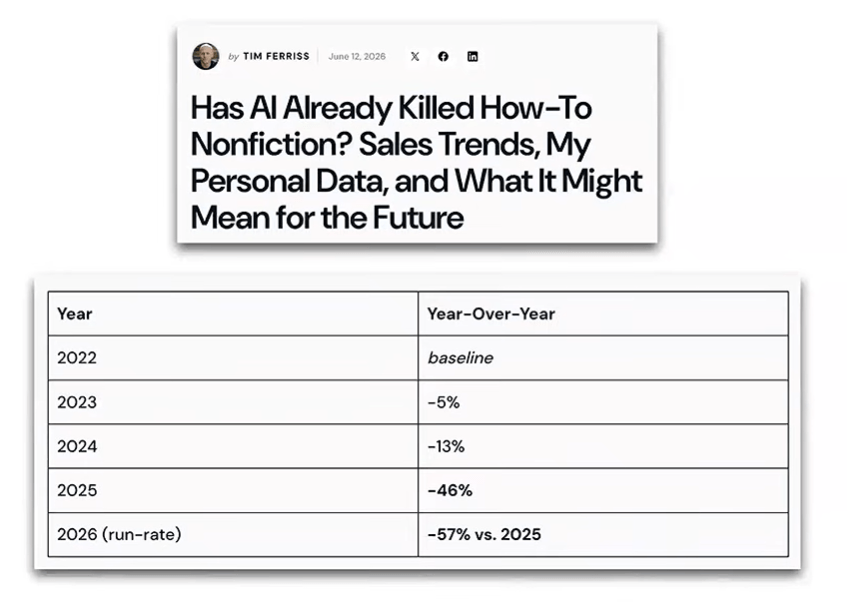
Tim Ferriss recently shared data revealing a significant drop in his print book sales and explained that the real financial return for nonfiction writers comes from the experiences, connections, and backend opportunities the book creates.
This week, industry expert Jane Friedman highlighted what many insiders have seen coming. Traditional Big Five publishers are stepping back from categories like self-help, poetry, and non-celebrity memoirs. Her advice is to skip the cycle of chasing agents and traditional pitch meetings. Instead, look to small indie presses or self-publishing.
What the Data is Really Telling Us
When I worked at HarperCollins in 2021, the writing was already on the wall. Non-fiction imprints were struggling because the old model relied on turning social media followers into $30 physical book sales. That formula simply doesn’t hold up anymore, especially now that readers can get quick how-to answers directly from AI tools.
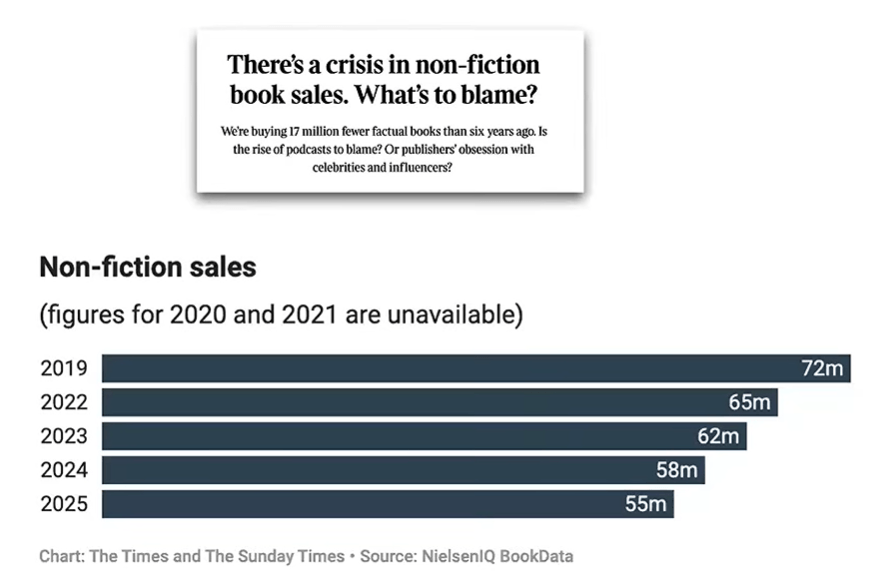
This disruption is actually incredible news for writers and I’ve been championing this idea since 2016: Your book is the launchpad for your income, not the ceiling.
When you stop expecting a bound book to carry the entire weight of your financial livelihood, you unlock the real power of being an author in the modern world.
Moving Past the Royalty Trap
For decades, writers were taught to measure their success by advance checks and Amazon rankings. Traditional publishing rarely offered true career sustainability for non-fiction experts. Handing over the majority of your rights for a small royalty check kept authors trapped in a cycle of constant churning.
What’s happening now finally gives you the power.
Look at how Tim Ferriss built his path. The lasting legacy of The 4-Hour Workweek served as the ultimate trust signal, opening doors to high-level networks, advisory roles, and early-stage equity investments in companies like Uber, Shopify, and Meta.
Minda Harts, author of The Memo, didn’t rely on standard book royalties to build a thriving career. She used her book as an authority generator for a high-value advisory practice. She leveraged the book’s message to secure corporate consulting retainers, lead executive workshops, and build specialized training cohorts for workplace leaders.
Building Your Backend Ecosystem
When you own your intellectual property through indie or hybrid publishing, your book becomes a high-trust invitation into your broader ecosystem. You can offer readers meaningful, human-centered ways to engage with your work.
You can step into high-stakes advisory roles where your lived experience guides complex decisions that AI can’t navigate.
You can bring like-minded people together in curated communities, giving them the peer support and access they want.
You can align your frameworks directly with businesses through revenue shares or performance partnerships.
You can also help people bridge the gap between knowing what to do and actually doing it through facilitated cohorts.
Converting even 1% of a dedicated 10,000-reader audience into high-value backend experiences creates a thriving enterprise while keeping full control of your creative freedom.
Building on Your Terms
You don’t need a traditional publisher to validate your message or your book. You can build trust with the people who need your work most through podcasts, essays, and independent publishing.
The decline of the old publishing pipeline is the beginning of an empowering era where you can build a sustainable career on your own terms, anchored by a book that serves as the entry point to your true impact.
It's Finally Time to Master Your Marketing
Download the 100 Book Marketing Touchpoints and get100 actions you can take so you can stop guessing and start selling books.